
Ignoring spring problems can quickly lead to damaged openers, snapped cables, or doors falling unexpectedly. If your garage door is showing any of these warning signs, call now before the problem gets worse.
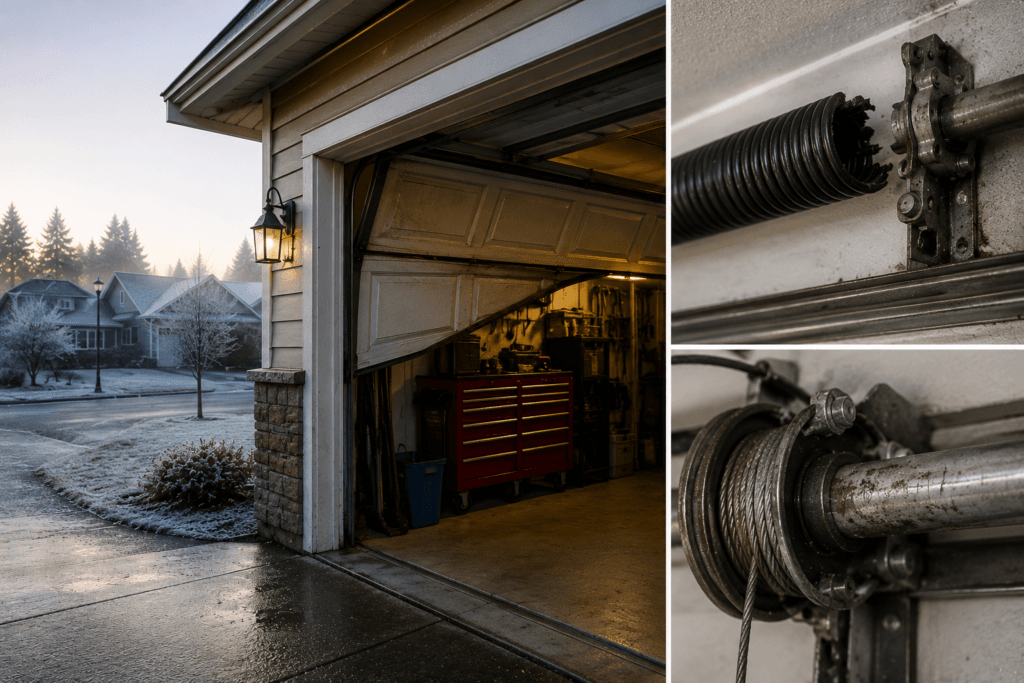
Many homeowners describe a broken spring sounding like a loud pop, snap, or even a gunshot coming from inside the garage. This usually happens when a worn spring finally reaches its cycle limit and breaks under tension.
Your opener may still sound like it’s working, but the door barely moves—or doesn’t move at all. The spring helps carry most of the door’s weight, so when it breaks, the opener often can’t lift the door properly.
If you try opening the garage door manually and it suddenly feels much heavier than normal, this is often one of the clearest signs of a failed spring system.
When one spring breaks or loses tension, the door may lift unevenly or appear crooked while opening and closing.
This often happens when the opener detects resistance from a broken spring and automatically stops to prevent additional damage.
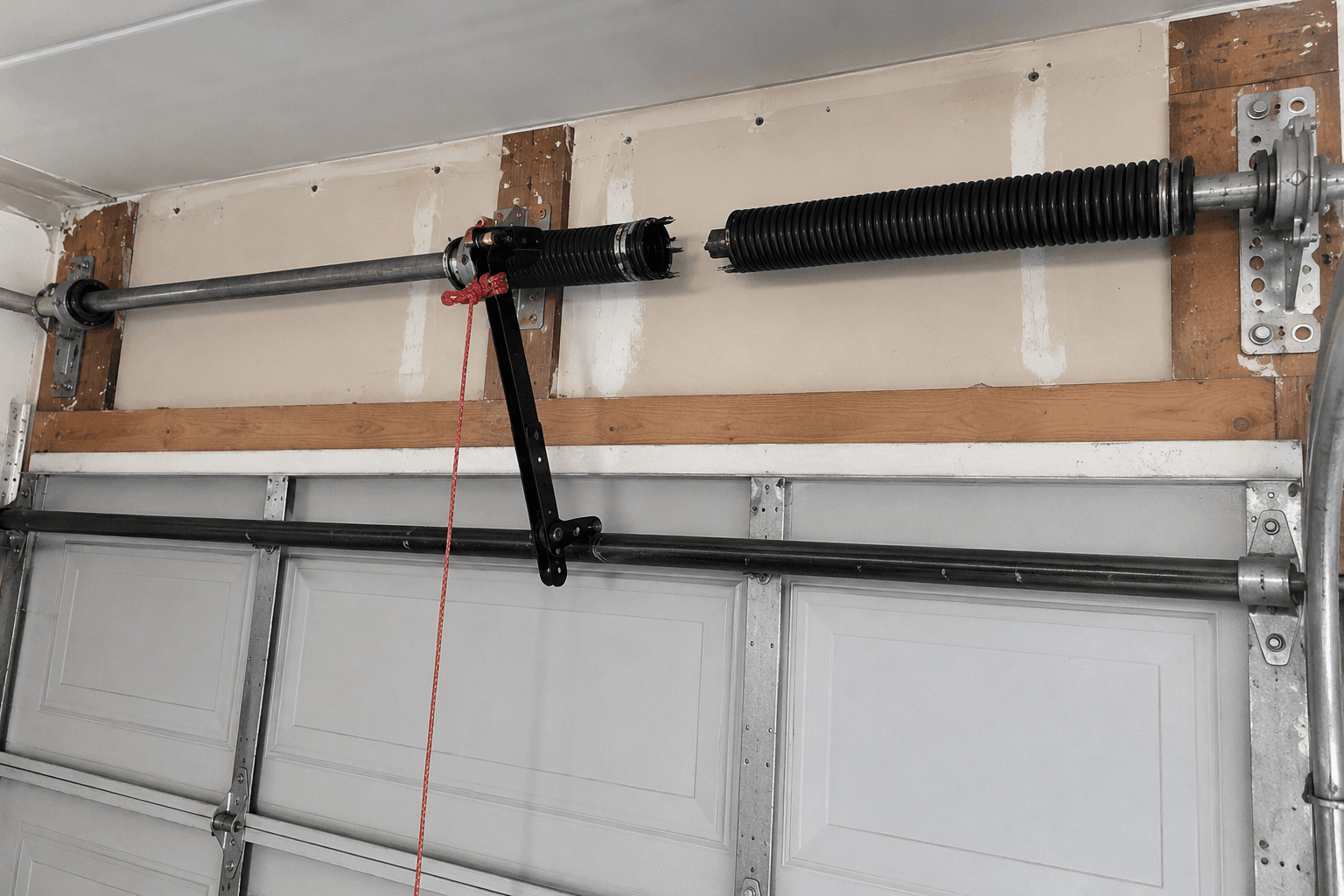
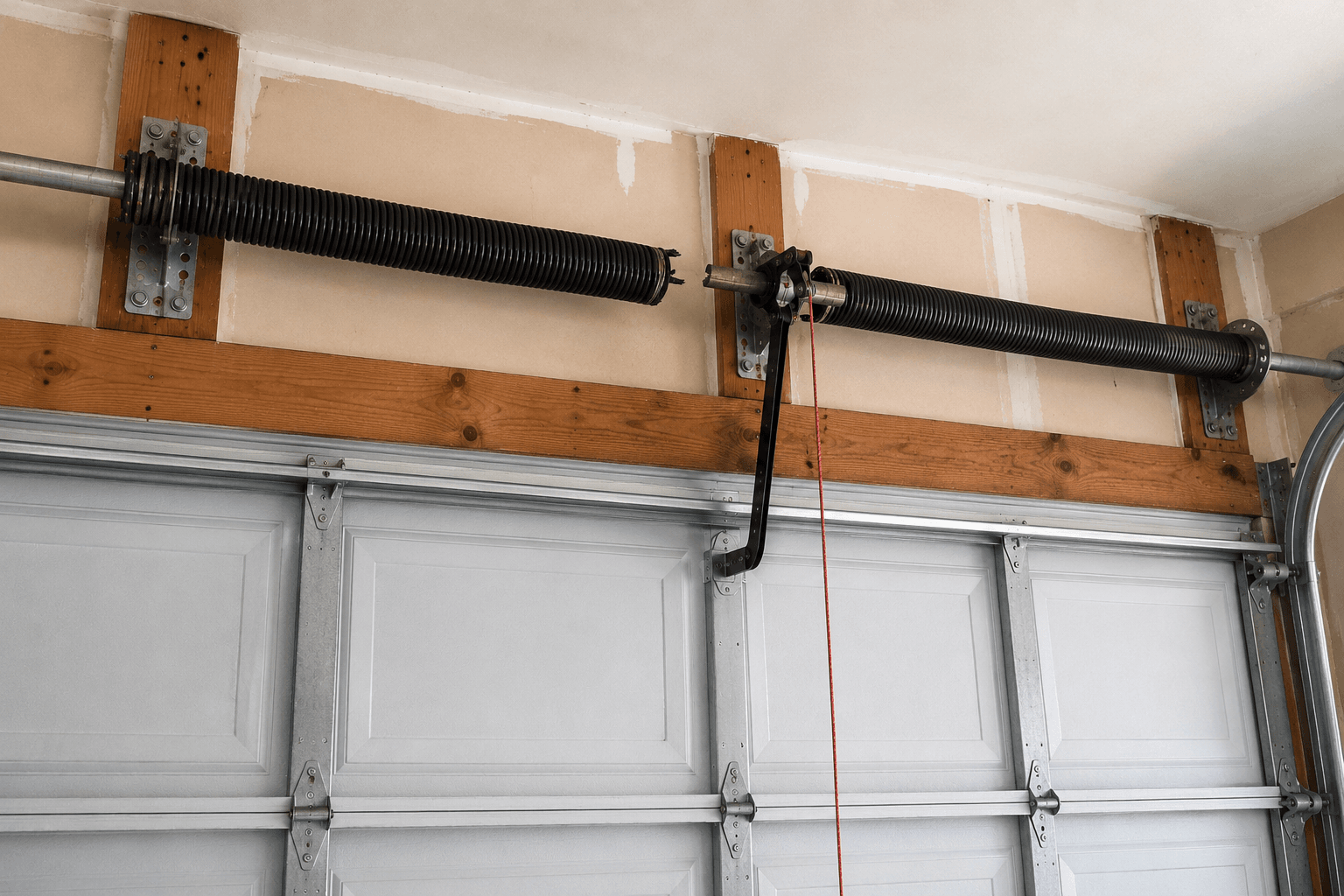
If you notice a visible separation in your torsion spring above the garage door, that’s a strong sign the spring has snapped and needs replacement.
Ignoring spring problems can quickly lead to damaged openers, snapped cables, or doors falling unexpectedly. If your garage door is showing any of these warning signs, call now before the problem gets worse.
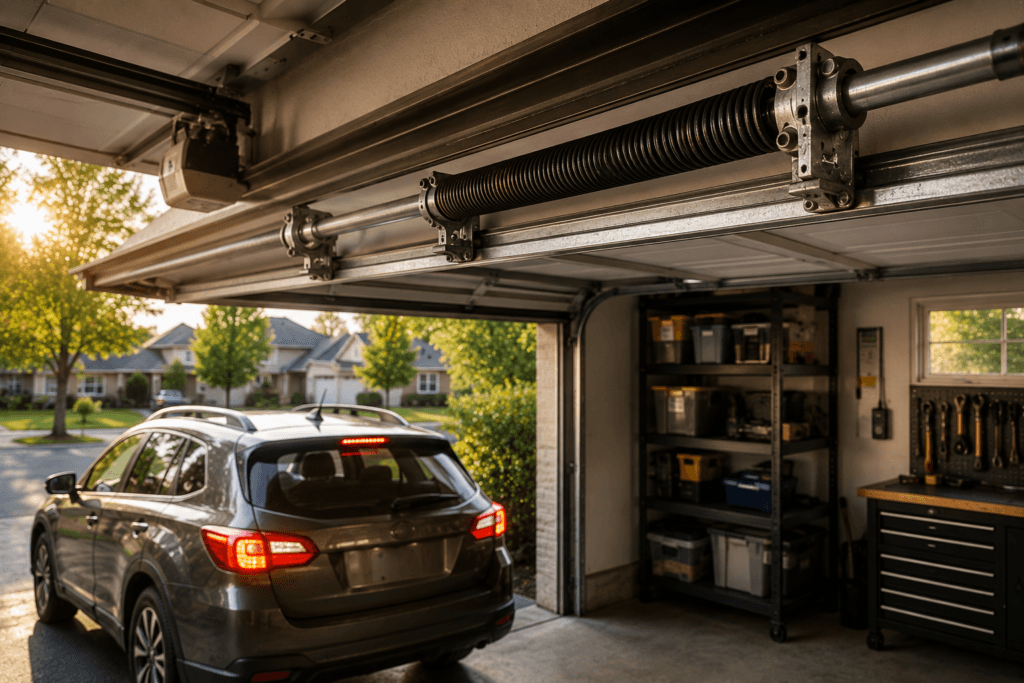
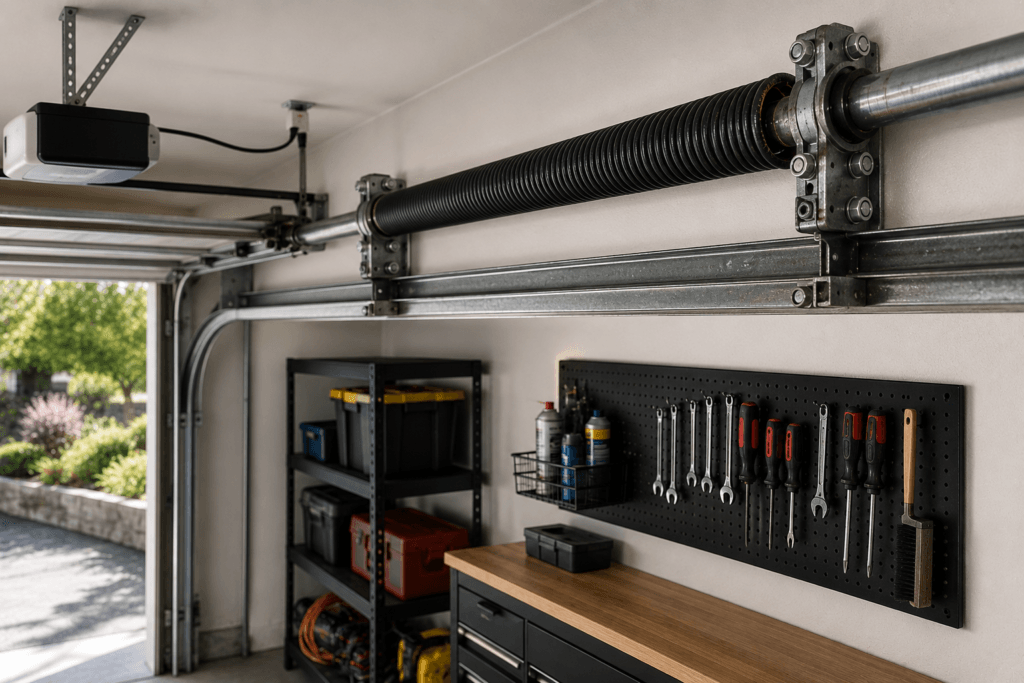
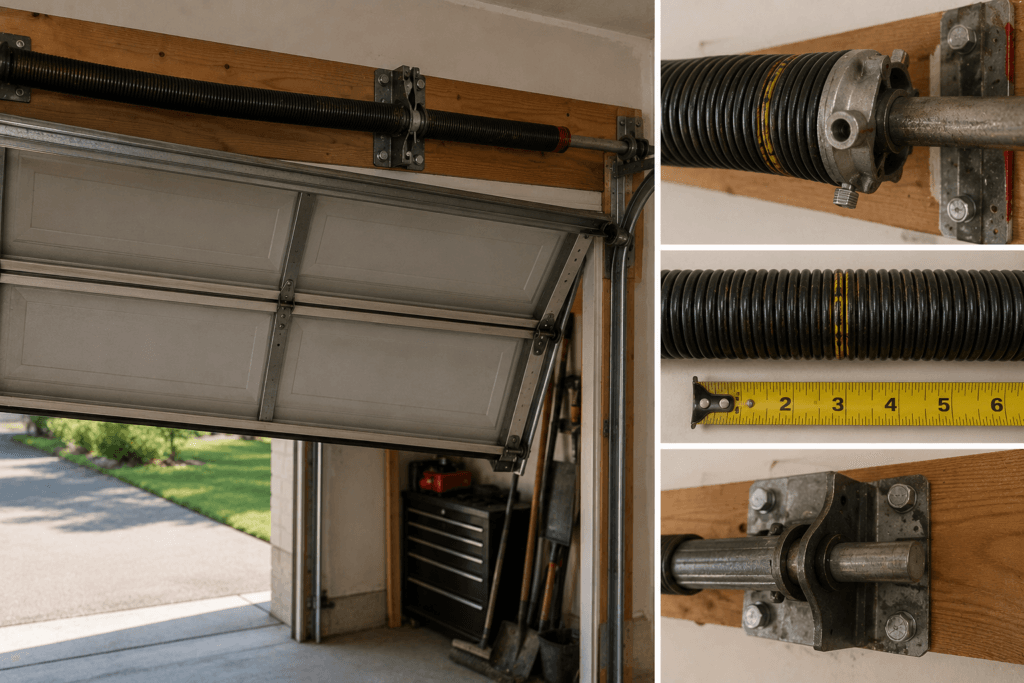
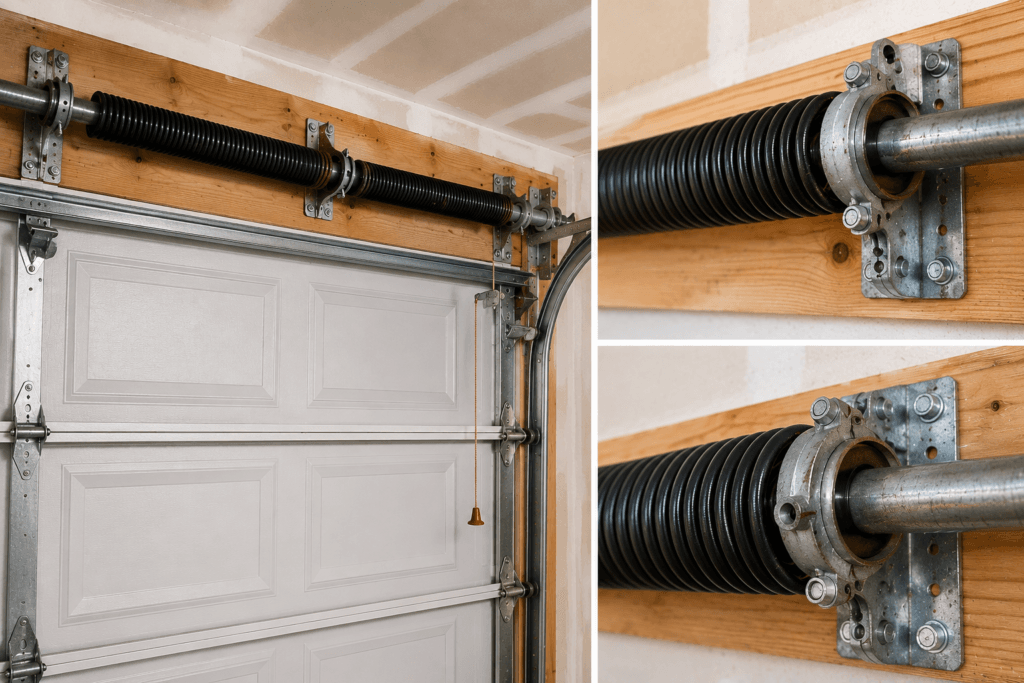
Some newer homes use lower-cycle springs that wear out faster under heavy daily use.
Many spring failures start as small warning signs like slow movement, loud noises, or uneven door operation before turning into full breakdowns. Routine maintenance and fast repairs can help prevent bigger issues.
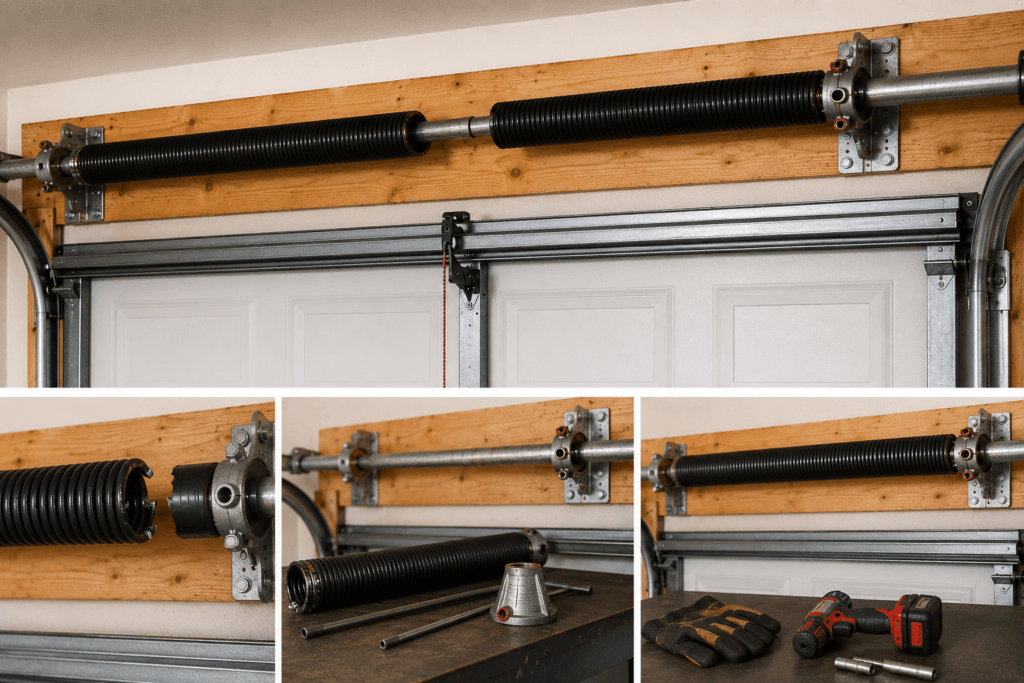
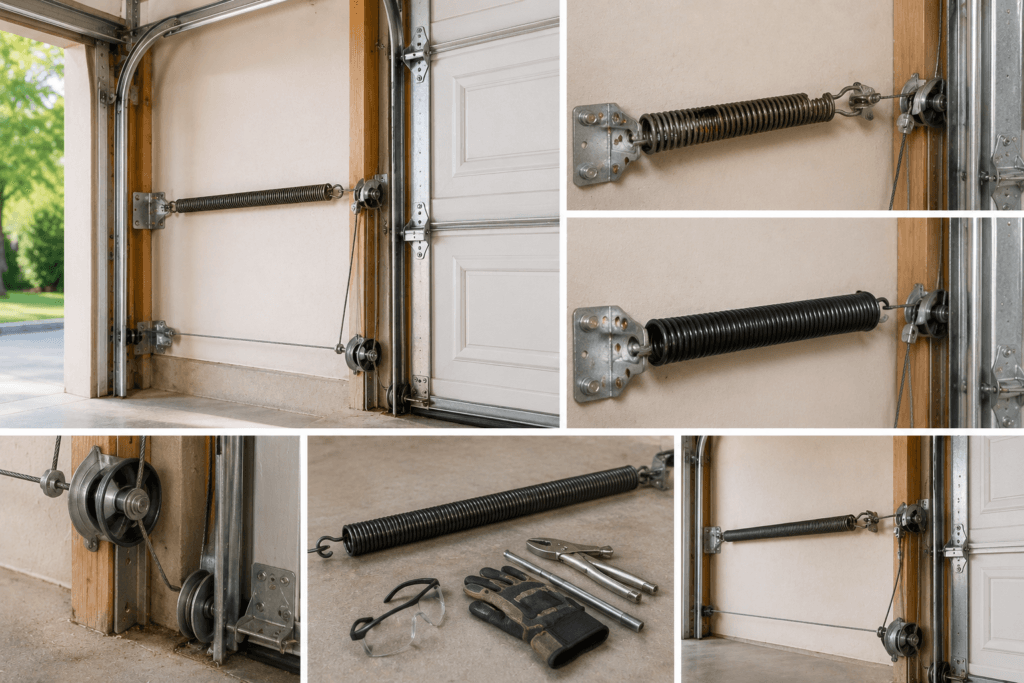
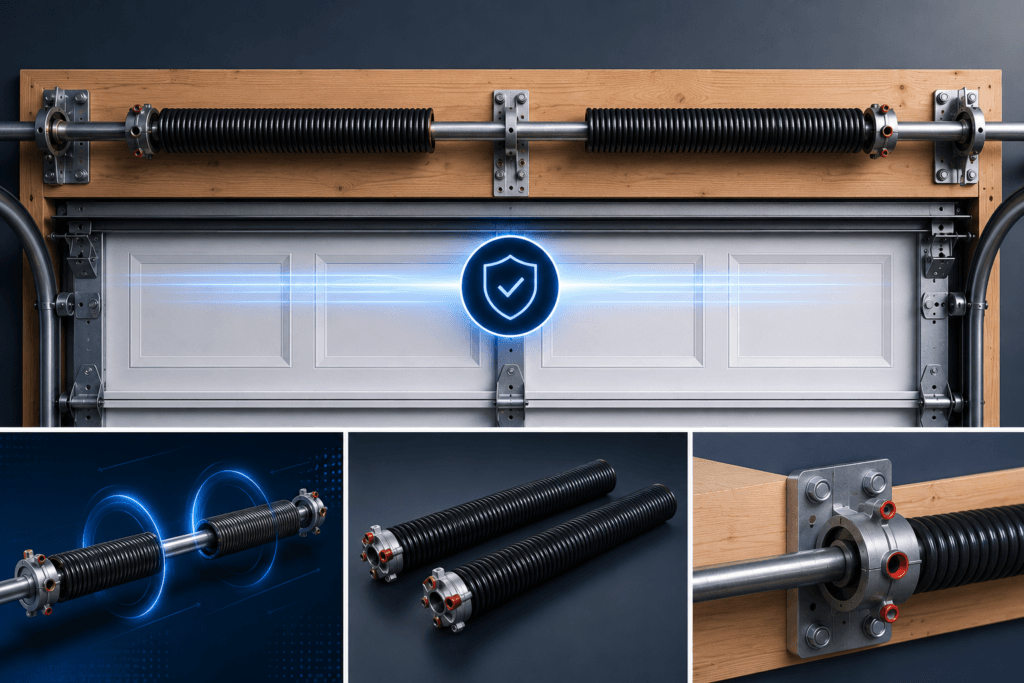
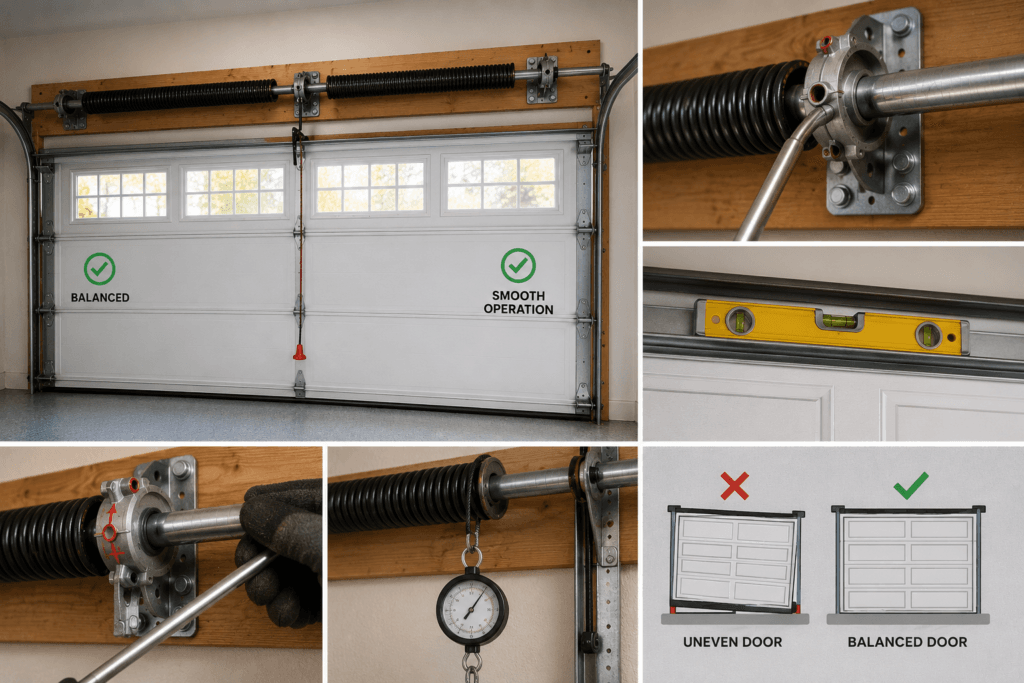
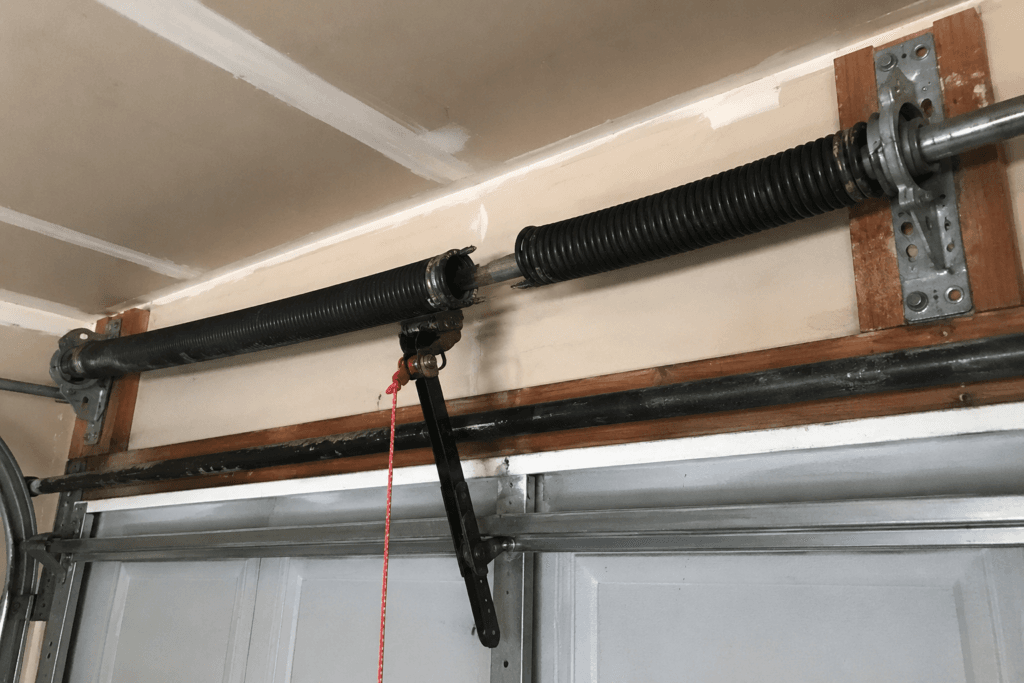
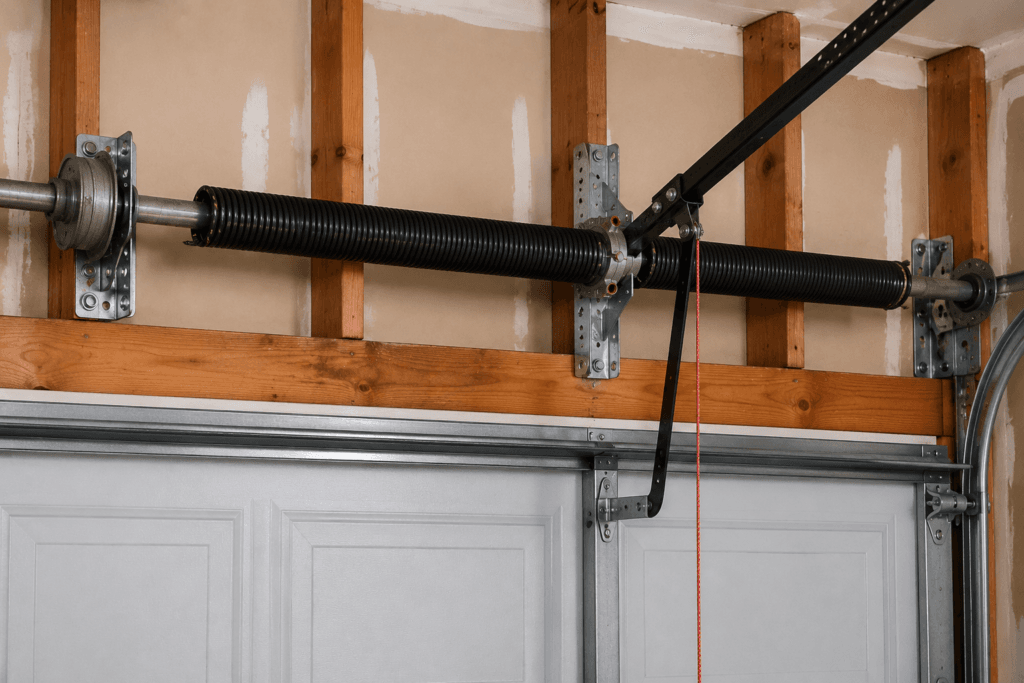
Every spring repair includes a full inspection of cables, rollers, and opener strain to help prevent future breakdowns.
Not all springs are the same. Using the wrong spring size can create premature wear, unsafe operation, and future breakdowns. We install properly matched springs based on your garage door’s weight and usage.
We safely remove damaged springs and install new components while following proper tensioning procedures.
After installation, we test door balance, opener performance, cable alignment, and overall movement to make sure everything operates safely.
If we notice worn rollers, cable issues, or opener strain, we explain your options clearly—without pressuring you into unnecessary repairs.
Most spring repairs can be completed the same day depending on parts availability.
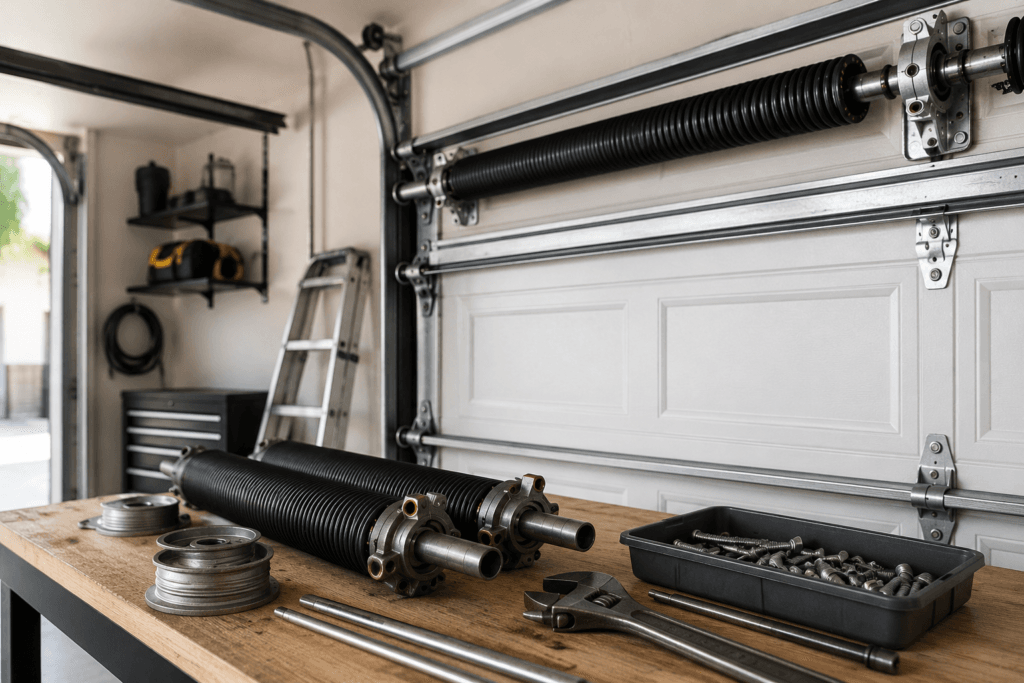
Most homeowners in Puyallup spend anywhere from $150 to $500+, depending on the repair.
$150–$300+
$250–$500+
Pricing Varies
If your car is trapped before work, your garage door is stuck open overnight, or you need urgent repairs during bad weather, emergency service may affect pricing depending on timing and parts availability.
Pricing Varies
We always inspect the full system and provide upfront pricing before any work starts—so there are no surprises.
Torsion springs are tightly wound and can snap violently if released improperly. This is one of the biggest reasons DIY repairs often go wrong.
Without proper spring tension, garage doors can suddenly slam shut or become dangerously heavy to lift manually. This can damage vehicles or injure someone nearby.
Installing the wrong spring can cause premature failure, opener strain, and uneven door movement.
Broken springs often place extra stress on cables, rollers, bearings, and openers. DIY repairs may miss these related issues entirely.
Many homeowners attempt temporary DIY fixes when their car is trapped before work or during bad weather—only to create bigger repairs later.
If your garage door spring breaks, the safest option is to have the system inspected and repaired properly.
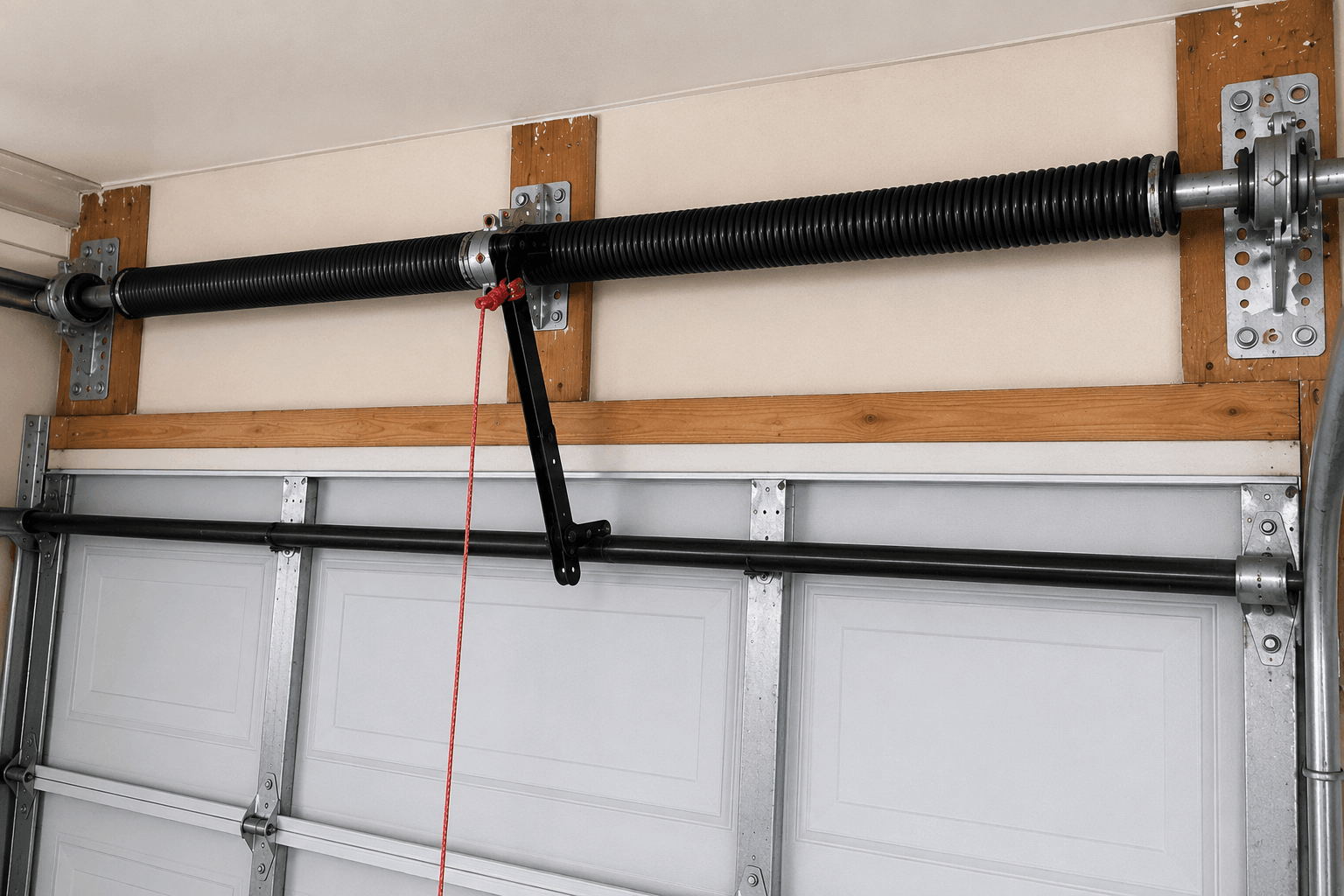
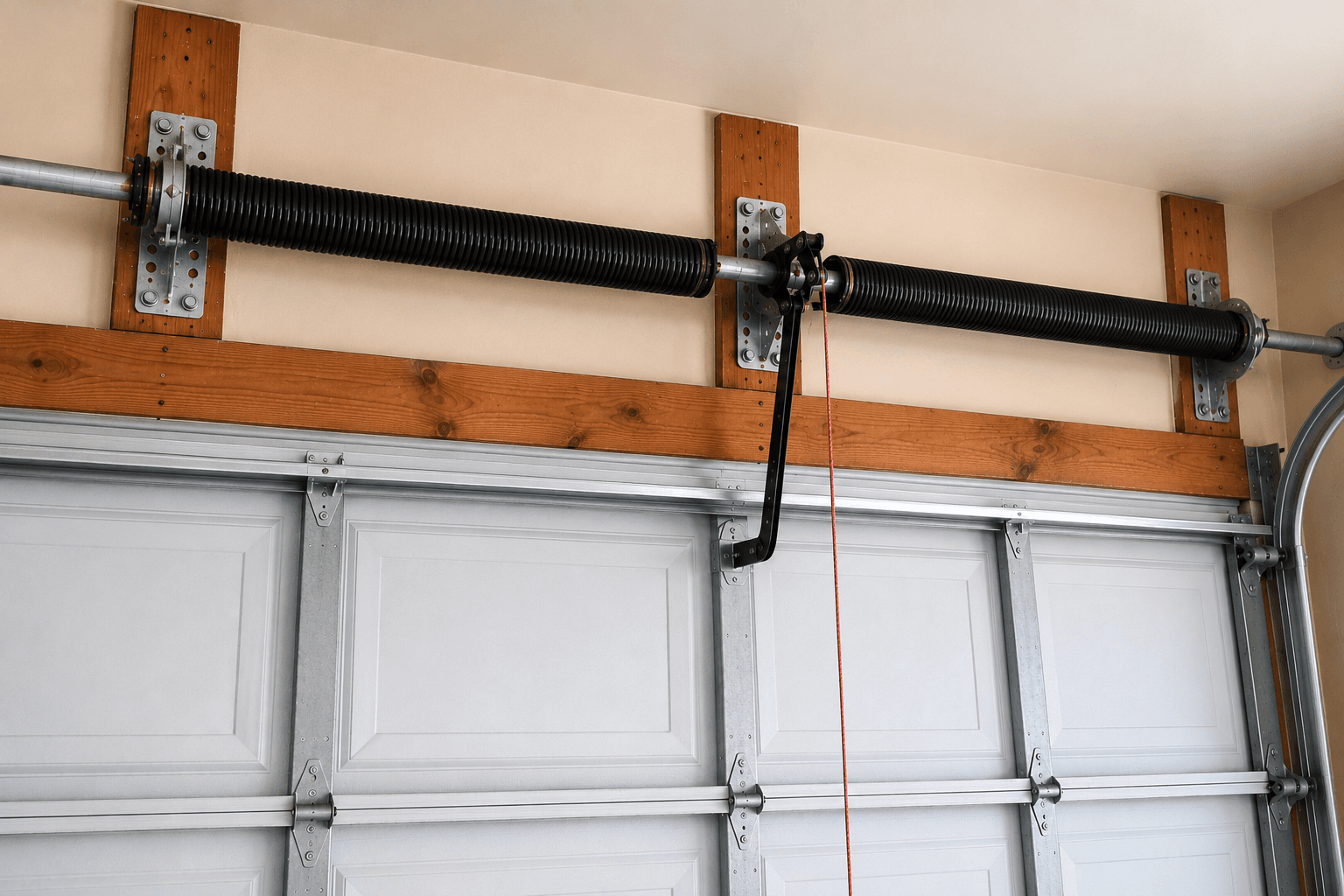
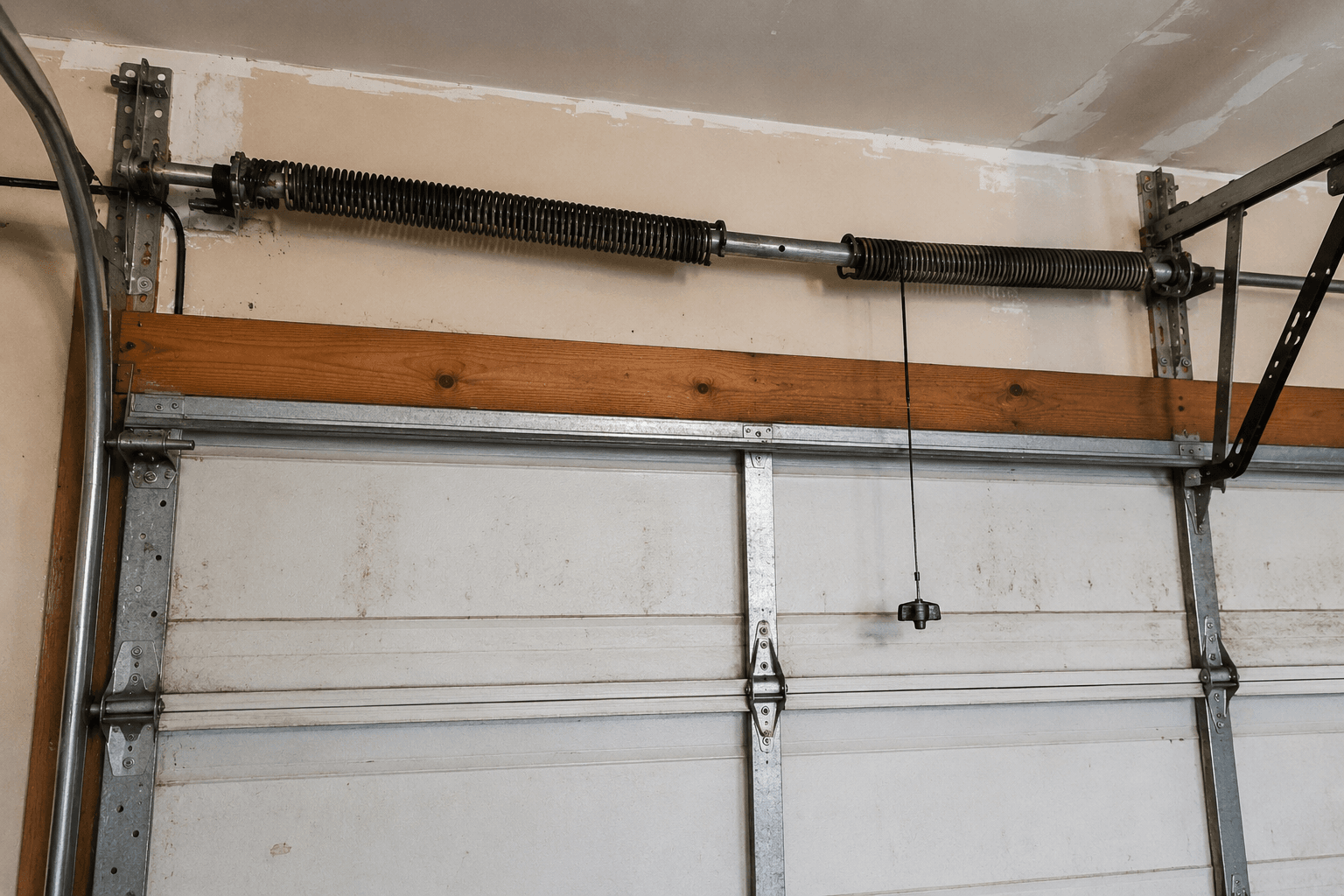
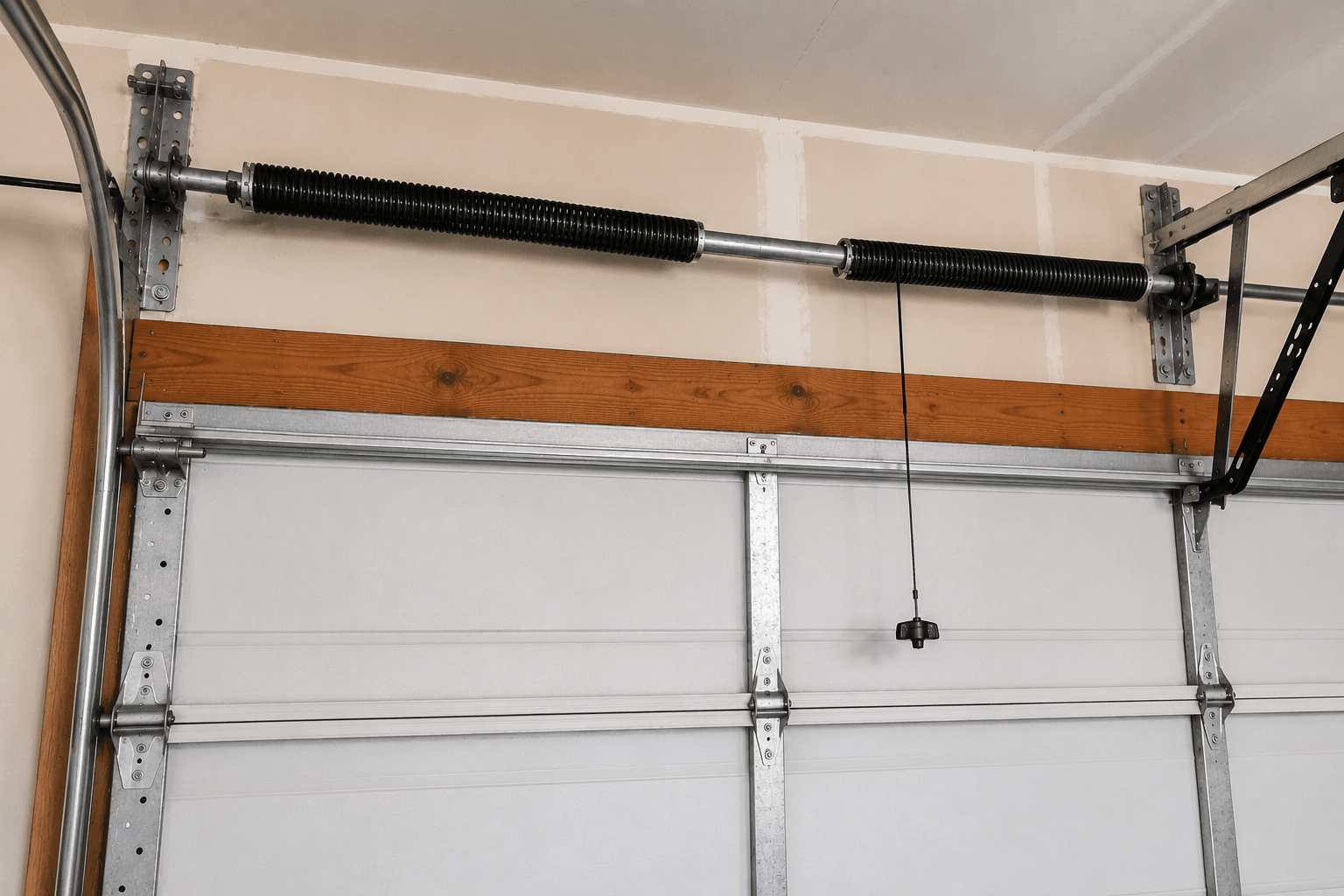
Fast repairs matter—but proper spring sizing, balance testing, and full inspections matter even more.
Fast repairs matter—but getting the repair done correctly the first time matters even more.
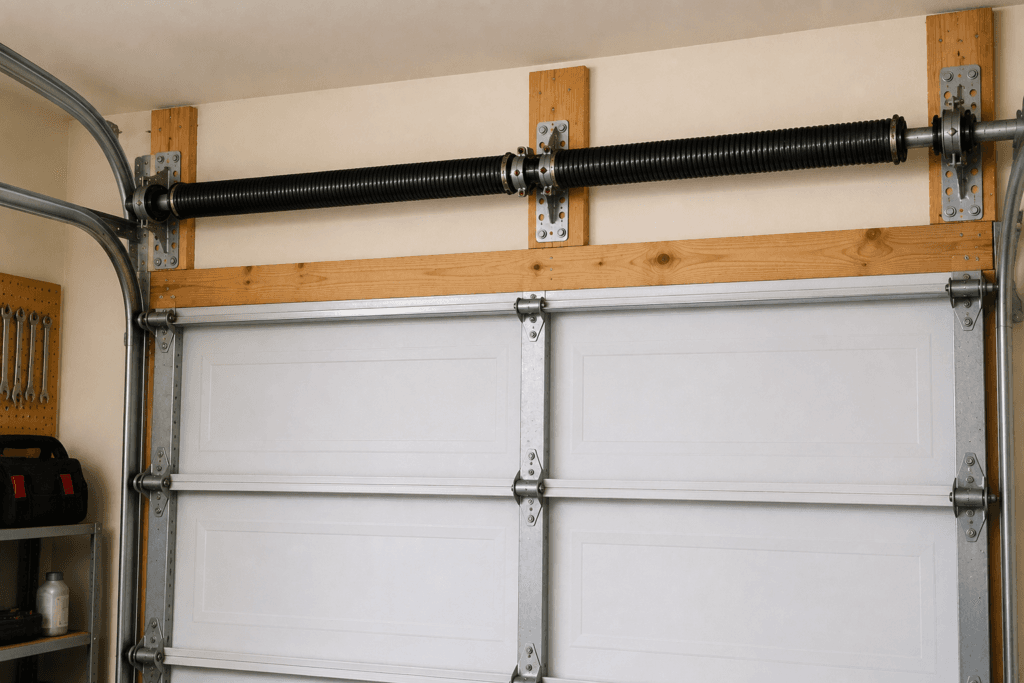
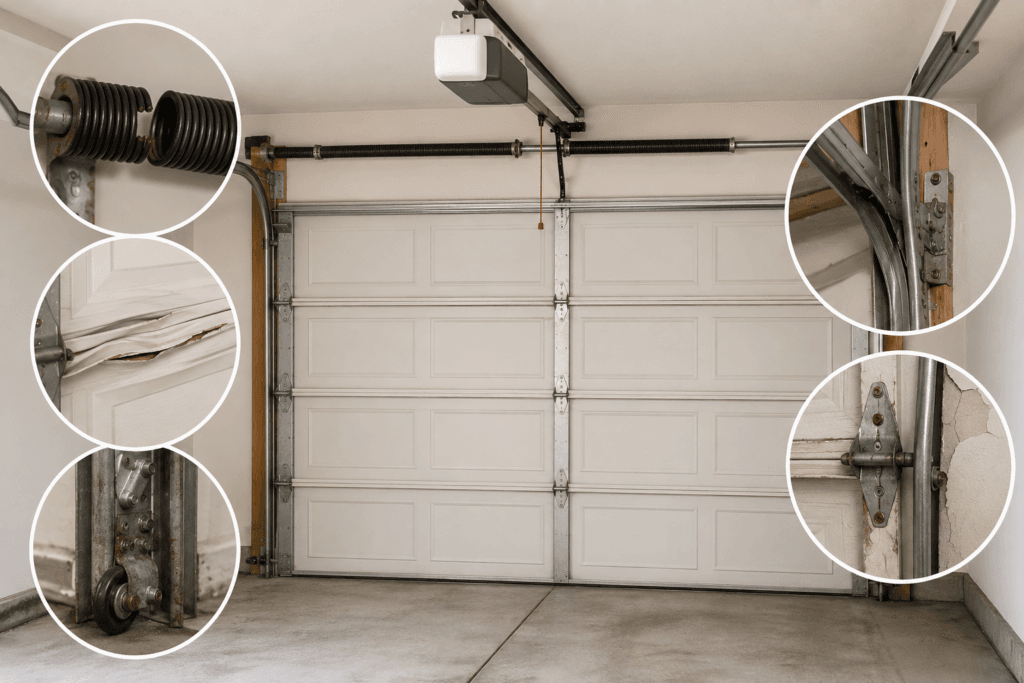
Sometimes a spring problem is part of a larger issue affecting the overall garage door system. In these situations, repeated repairs may become less cost-effective over time.
A full replacement may be the better long-term option if you’re dealing with:
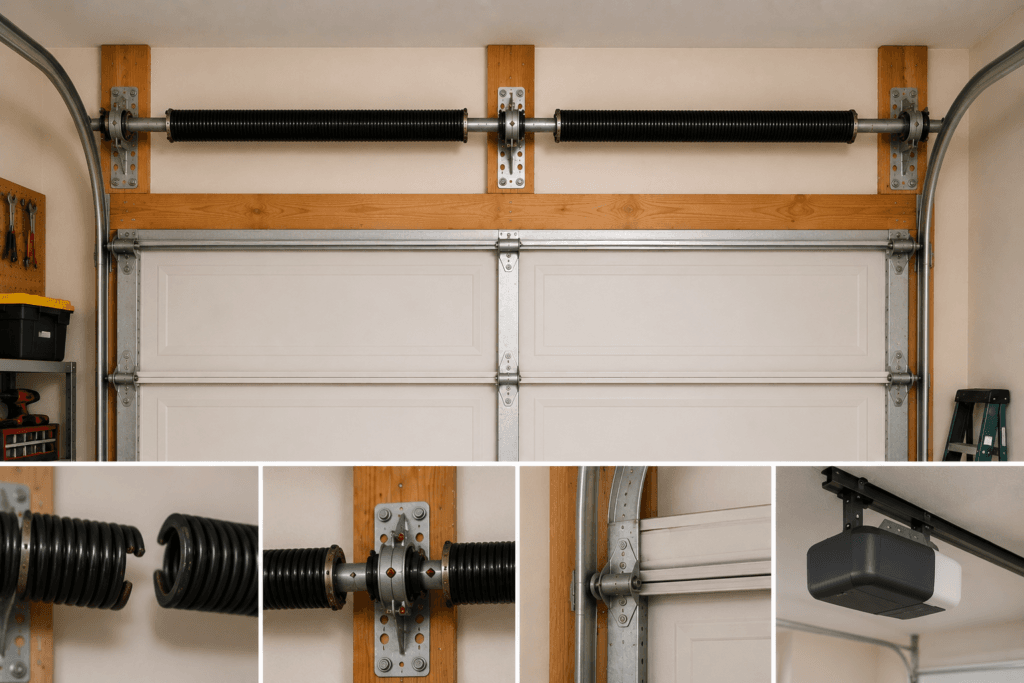
We inspect your full system and recommend the most practical option based on safety, cost, and long-term reliability.
In many cases, yes.
If your garage door uses two springs, both usually wear at similar rates. When one breaks, the second spring may fail soon after.
Replacing both at the same time often saves homeowners another emergency repair visit later.
Most springs fail after reaching their cycle lifespan.
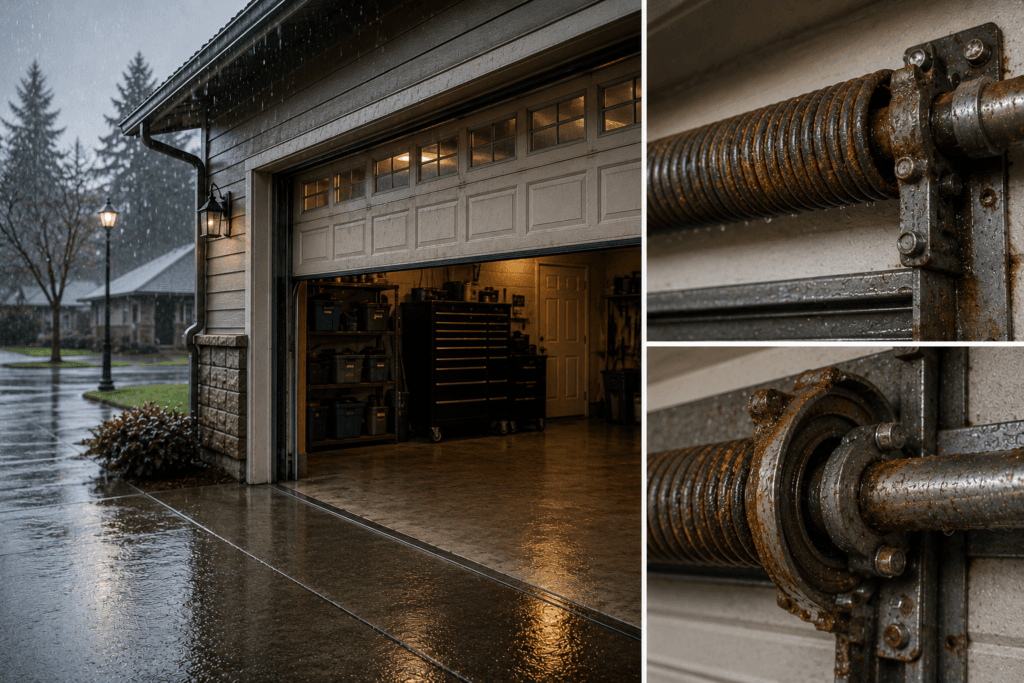
In Puyallup, heavy daily garage use, moisture exposure, colder mornings, and lack of
maintenance can all accelerate spring wear.
Many homeowners first hear a loud snapping noise when the spring finally breaks.
Most standard springs last between 7–12 years, depending on usage frequency and spring quality.
Homes that use the garage as the primary entrance may wear springs out faster.
DIY spring repairs can be extremely dangerous because springs operate under high tension.
Improper repairs can cause serious injuries or additional damage to your garage door system.
Pricing depends on:
Many spring repairs can be completed the same day depending on parts availability and scheduling.